
The Road Not Taken | Poem By Robert Frost
An indepth analysis, line by line analysis, quations and answers and summary of the Poem, The road not taken by Robert Frost.

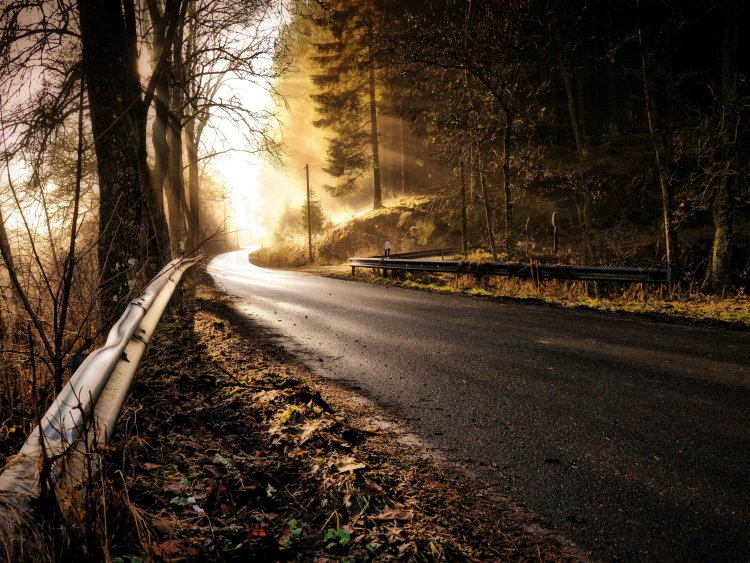
The Road NoT TakeN
Robert Frost
Two roads diverged in a yellow wood,
and sorry I could not travel both
and be one traveler, long I stood
and looked down one as far as I could
To where it bent in the undergrowth;
Then took the other, as just as fair,
and having perhaps the better claim,
Because it was grassy and wanted wear;
Though as for that the passing there
had worn them really about the same,
and both that morning equally lay
In leaves no step had trodden black.
oh, I kept the first for another day!
Yet knowing how way leads on to way,
I doubted if I should ever come back.
I shall be telling this with a sigh
Somewhere ages and ages hence:
Two roads diverged in a wood, and I—
I took the one less traveled by,
and that has made all the difference.
The Road Not Taken | An In-Depth Analysis
Robert Frost’s poem The Road Not Taken is one of the most celebrated and widely interpreted pieces of American literature. On its surface, the poem tells the story of a traveler who must choose between two diverging paths in a yellow wood, but beneath this simple narrative lies a rich tapestry of themes, symbols, and ambiguities that invite readers to reflect on the nature of choice, individuality, and the passage of time.
I. Overview and Structure
The Road Not Taken is composed of four quintains (four stanzas of five lines each) with a rhyme scheme of ABAAB. This regular structure contrasts with the complex, often contradictory emotions conveyed through its language and imagery. The poem begins with the traveler’s moment of decision and concludes with a retrospective view on the choice made—a decision that, in hindsight, has defined the traveler’s life.
- Stanza 1: Introduces the setting—a yellow wood—and the initial dilemma: choosing between two paths.
- Stanza 2: The traveler examines the two roads more closely, noting that one appears “grassy and wanted wear,” yet he soon observes that both paths are actually worn “really about the same.”
- Stanza 3: The traveler anticipates a future where he will recount his choice with a “sigh,” hinting at the weight of decision-making and the inevitable wonder of “what if.”
- Stanza 4: The poem culminates with the famous lines: “I took the one less traveled by, / And that has made all the difference.” This statement is both definitive and ambiguous, leaving readers to ponder the true nature of that difference.
II. Themes and Interpretations
-
Choice and Consequence:
- Theme: At its core, the poem is about making choices and living with their consequences. The diverging paths symbolize the choices we face in life—each decision opening up a different future.
- Analysis: While the traveler chooses one path, he acknowledges that both paths were similar in many ways. This suggests that the significance we attach to our decisions might be more a matter of perception than of absolute differences.
-
Individuality and Nonconformity:
- Theme: The notion of taking the “road less traveled” has often been interpreted as a celebration of individualism.
- Analysis: However, a closer reading reveals an inherent irony. Although the traveler later claims that his choice “made all the difference,” he earlier admits that the roads were, in fact, quite similar. This ambiguity hints that the value we assign to our choices may be a form of self-created narrative rather than a reflection of objective reality.
-
Regret and Ambivalence:
- Theme: The poem is tinged with a bittersweet quality—an acknowledgment that every choice carries with it an element of loss.
- Analysis: The “sigh” in the third stanza can be read as either regret or contemplation, underscoring the duality of human experience. The traveler's future narrative about his choice may be more about constructing meaning in retrospect than about the decision itself.
-
The Illusion of Control:
- Theme: Frost’s poem also challenges the notion that our choices are entirely within our control.
- Analysis: The similarity between the two roads suggests that the differences in our lives may not be as stark as they appear. Instead, the impact of our decisions might be amplified by the stories we tell ourselves about them.
III. Literary Devices and Their Impact
- Imagery: The vivid depiction of the yellow wood and the diverging paths creates a strong visual metaphor for life’s choices. The natural setting evokes both beauty and the inevitability of change.
- Symbolism: The roads themselves serve as powerful symbols for the various directions one’s life can take. The act of choosing a path reflects the human condition of navigating through uncertain futures.
- Tone and Ambiguity: Frost’s careful use of tone—oscillating between decisive narrative and reflective uncertainty—mirrors the complex emotions associated with making choices. The poem’s ambiguity encourages multiple interpretations, inviting readers to find personal meaning in the lines.
- Irony: Perhaps the most striking literary device in the poem is irony. Although the traveler asserts that his choice “has made all the difference,” he also reveals that the roads were equally traveled. This irony challenges the reader to question whether our choices truly set us apart or if they are retrospectively glorified.
IV. Questions and Answers
Q1: What does the yellow wood symbolize in the poem?
A1: The yellow wood symbolizes a transitional period in life—a moment of decision where the familiar (or safe) is left behind for unknown possibilities. It evokes a sense of change and the inevitability of moving forward.
Q2: Is The Road Not Taken a celebration of individualism?
A2: While the poem is often interpreted as a tribute to nonconformity—taking “the road less traveled”—a closer reading reveals ambiguity. Frost suggests that the differences between the two roads are minimal, implying that the significance of the choice may be more about the story we later tell than about the choice itself.
Q3: How does the poem explore the concept of regret?
A3: The element of regret is introduced through the traveler’s anticipation of a future narrative marked by a “sigh.” This could indicate a wistful reflection on the road not taken, highlighting the inherent ambivalence in all life choices.
Q4: What role does ambiguity play in the poem’s overall message?
A4: Ambiguity is central to the poem’s impact. It invites readers to question the nature of decision-making and the human tendency to assign profound meaning to our choices. This uncertainty mirrors the real-life experience of wondering how different choices might have led to different outcomes.
Q5: How does the poem challenge the idea of fate and free will?
A5: The poem subtly critiques the notion of absolute free will by suggesting that the differences between our choices might be less significant than we imagine. The traveler's later interpretation of his choice may simply be a way to make sense of his life’s unpredictable nature, thereby blurring the line between fate and free will.
A Line-by-Line Analysis of Robert Frost’s “The Road Not Taken”
Robert Frost’s “The Road Not Taken” is a deceptively simple poem that explores the nature of decision-making and the profound impact of choices on one’s life. At first glance, the poem appears to be about a traveler who must choose between two diverging paths in a wood. However, a deeper, line-by-line analysis reveals a meditation on uncertainty, self-deception, and the inevitable consequences of our decisions. Below is an in-depth examination of each line and the layers of meaning embedded within.
Stanza One
Line 1: “Two roads diverged in a yellow wood,”
The poem opens with a vivid image: a fork in the road set against the backdrop of a “yellow wood.” The color yellow evokes autumn—a season of change and transition. Here, the diverging roads serve as a metaphor for life’s choices, suggesting that at any moment, we are faced with different paths that can lead us in completely separate directions.
Line 2: “And sorry I could not travel both”
The speaker expresses regret over the impossibility of exploring both paths. This line introduces the universal dilemma of choice: once a decision is made, the alternatives are inevitably left behind. The word “sorry” hints at a lingering sense of loss or what might have been.
Line 3: “And be one traveler, long I stood”
This line emphasizes the solitude inherent in decision-making. The speaker, as a solitary traveler, stands at the crossroads, highlighting the personal and isolating nature of choices. The phrase “long I stood” suggests that the decision was not made lightly—it required deep contemplation.
Line 4: “And looked down one as far as I could”
Here, the speaker attempts to foresee the outcome of one of the paths. The act of “looking down” the road implies a search for clarity or certainty about the future. However, it also underscores a limitation: no matter how intently we search, the future remains uncertain.
Line 5: “To where it bent in the undergrowth;”
The road “bent in the undergrowth,” disappearing into a tangle of foliage. This image symbolizes the inherent unpredictability of life. Just as the path’s end is obscured, the eventual consequences of our choices remain hidden until we commit to them.
Stanza Two
Line 6: “Then took the other, as just as fair,”
After careful consideration, the speaker chooses the second road, which appears equally appealing (“just as fair”) as the first. This line suggests that, at the moment of decision, both options seem to hold equal promise, reinforcing the idea that many of life’s choices are not clear-cut.
Line 7: “And having perhaps the better claim,”
The speaker hints that the second road might have offered a slight advantage. The phrase “better claim” introduces the notion that we often justify our decisions by attributing a modest superiority to one option over another—even when the differences are minimal.
Line 8: “Because it was grassy and wanted wear;”
This line employs rich imagery: a road “grassy and wanted wear” implies that it was less traveled, less worn down by the footsteps of others. It suggests that the speaker is attracted to the idea of taking a path that promises novelty or independence—a metaphor for choosing an unconventional life path.
Line 9: “Though as for that the passing there”
The tone begins to shift here, as the speaker starts to question the significance of the road’s apparent freshness. The wording implies that the supposed benefits of the less-traveled path may not be as clear or substantial as first assumed.
Line 10: “Had worn them really about the same,”
In a moment of candid reflection, the speaker admits that, in reality, both roads were equally worn. This admission reveals a central irony of the poem: while we may later ascribe profound meaning to our choices, at the time of decision, the differences might be negligible.
Stanza Three
Line 11: “And both that morning equally lay”
This line reinforces the earlier observation by noting that on that particular morning, both paths were in a similar condition. The equality of the roads underscores the theme that many decisions we face do not have a clearly superior option.
Line 12: “In leaves no step had trodden black.”
The imagery of leaves “no step had trodden black” suggests untouched possibilities. The fresh, untrampled leaves evoke a sense of potential and purity, symbolizing the unexplored opportunities that each path holds.
Line 13: “Oh, I kept the first for another day!”
The speaker expresses a common human impulse: the desire to hold onto the option not chosen. There is a wistful hope that one day it might be possible to explore the path left behind, reflecting the regret and longing inherent in decisions that are forever final.
Line 14: “Yet knowing how way leads on to way,”
This line acknowledges the cascading nature of choices—how one decision inevitably leads to another. The interconnectedness of life’s paths means that once a choice is made, it sets off a chain of events, making it unlikely that one can ever return to the starting point.
Line 15: “I doubted if I should ever come back.”
Here, the speaker accepts the irreversible nature of the decision. The doubt about returning underscores the finality of choices and the understanding that, in life, each path taken forges a unique journey from which there is no turning back.
Stanza Four
Line 16: “I shall be telling this with a sigh”
Looking to the future, the speaker anticipates recounting this decision “with a sigh.” This “sigh” may convey regret, nostalgia, or a simple acceptance of the mystery of life’s outcomes. It sets a reflective tone that invites the reader to consider how choices weigh on us over time.
Line 17: “Somewhere ages and ages hence:”
The reference to a distant future—“ages and ages hence”—suggests that the impact of this choice will be remembered far into the future. It underscores the enduring significance of our decisions, no matter how trivial they may seem in the moment.
Line 18: “Two roads diverged in a wood, and I—”
By echoing the opening line, the speaker brings the poem full circle. The pause created by the em dash leaves room for reflection, emphasizing the uncertainty and gravity of the choice made.
Line 19: “I took the one less traveled by,”
This line has become one of the most famous in modern poetry. The speaker claims to have chosen the less conventional path, suggesting that this decision has defined their individuality. Yet, as earlier lines reveal, the difference between the roads was minimal—raising questions about how we construct narratives around our choices.
Line 20: “And that has made all the difference.”
The poem concludes with an ambiguous statement. “All the difference” can be read in multiple ways: it might signify a positive, transformative impact or simply denote that the choice led to an entirely different life course. The ambiguity leaves readers pondering whether the “difference” is an improvement, a regret, or simply an inevitable outcome of life’s unpredictability.
The Road Not Taken: An Essay Summary
Robert Frost’s poem The Road Not Taken presents readers with a deceptively simple scenario—a traveler confronted with a fork in a wooded path—while exploring the profound and often ambiguous nature of choice. At its surface, the poem recounts the speaker’s moment of decision-making, yet beneath this narrative lies a meditation on the impact of choices in shaping one’s life. Frost uses the imagery of diverging roads to symbolize the crossroads that we all face, emphasizing that every decision carries with it a sense of both opportunity and loss.
In the opening stanza, the traveler finds himself in a yellow wood, where two paths spread out before him. The vivid description of the woods, coupled with the imagery of the forked road, sets the stage for a moment of introspection. The speaker deliberates over which path to take, noting that while the roads may appear similar, the choice is significant. This physical separation of the paths mirrors the metaphorical separation of life’s possibilities, each leading to a future that is uncertain and irrevocable.
As the poem unfolds, the traveler chooses one path over the other, despite acknowledging that both paths have been worn "really about the same." This decision is marked by a mixture of resolve and regret—a recognition that while he can only take one route, the other remains forever unexplored. The reflective tone of the poem invites readers to consider how the decisions we make define our experiences and shape our identities, even when the outcomes remain shrouded in mystery.
The final lines of the poem are particularly resonant. The speaker imagines himself in the future, recounting that his choice "made all the difference." This assertion is deliberately ambiguous; it leaves open the question of whether the decision led to a positive transformation or simply marked a divergence from an unknown alternative. Frost’s use of this reflective perspective highlights the human tendency to imbue our choices with greater meaning in hindsight, often glossing over the randomness and complexity inherent in the process of deciding.
Ultimately, The Road Not Taken is more than just a tale of a solitary walk in the woods—it is a universal reflection on the nature of decision-making. The poem encourages readers to acknowledge that while we often look back at our choices with both nostalgia and wonder, the true impact of those decisions remains a part of our personal narrative. By presenting the inevitability of choice along with the inherent ambiguity of its outcomes, Frost captures a fundamental aspect of the human experience: the simultaneous power and uncertainty of every decision we make.
In summary, the poem serves as a timeless reminder that every path we choose not only shapes our journey but also leaves us with a lingering curiosity about the roads not taken. Whether viewed as an ode to individualism or a meditation on the inevitability of regret, The Road Not Taken endures because it speaks to the universal and deeply personal nature of making choices—a process that defines who we are and the lives we ultimately lead.
Conclusion
This line-by-line analysis reveals that Frost’s poem is not just a meditation on a literal divergence in a wood but a profound commentary on the nature of life’s decisions and the ways in which we come to rationalize and remember them.
The in-depth analysis, along with the accompanying questions and answers, provides a comprehensive exploration of The Road Not Taken, highlighting its enduring relevance and the rich layers of meaning that continue to resonate with readers today.

Comments