
🇰🇪 Madaraka Day Poems 2025: Celebrating Kenya's Freedom and Future
Explore 12 powerful Madaraka Day poems in relatable Kenyan English. Celebrate Kenya’s freedom, heroes, unity, and future.

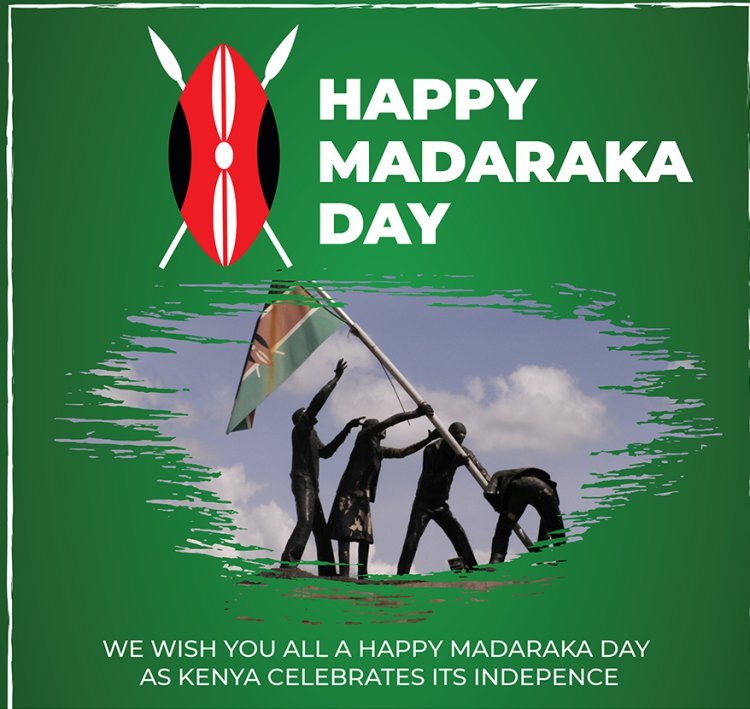
Madaraka Day marks the beginning of Kenya's self-rule — a celebration of freedom, sacrifice, and pride. This poetry collection is crafted with the Kenyan heart in mind, divided into categories to honor our heroes, remember our history, and inspire future generations. Whether for a classroom, a community stage, or a family gathering, these poems speak to our shared story.
🇰🇪 Category 1: Poems Honoring Freedom Fighters
🛡️ Poem 1: “We Rose With Roars, Not Whispers”
Short Note:
This poem honors the mighty voices that refused silence during Kenya’s fight for independence.
We rose with roars, not whispers,
Not even chains could hide our cry.
The forests heard our courage loud,
As rifles echoed under the sky.Jomo stood firm, Dedan did not bend,
Muthoni bore wounds with pride.
A land was taken, but never lost—
Because patriots refused to hide.Mothers cooked in silence bold,
Fathers fought with blood and soul,
Youths in rags stood tall with hope,
All daring to pay the freedom toll.It wasn’t gifts that bought us dawn,
It was pain that birthed Madaraka morn.
And now we stand, heads unbowed—
Because their courage made us proud.
🗽 Poem 2: “The Fire in Their Feet”
Short Note:
A tribute to the Mau Mau and other warriors whose feet walked paths of pain for our joy.
The fire in their feet lit our road,
They marched through storms, carrying loads.
Not of goods, but dreams unmet—
Of a country free, no longer in debt.They didn’t wait for promises fair,
They carved them into forest air.
From Ruring’u to Kapenguria’s cell,
They wrote a tale the world would tell.Their names might fade, their photos fade,
But their brave heartbeat will never jade.
Today we dance, today we cheer,
Because their fight brought Madaraka near.
🕊️ Quick-Read Highlight:
Our freedom wasn’t free. These poems honor the brave men and women who fought boldly so Kenya could stand tall.
🤝 Category 2: Unity and Nationhood
🌍 Poem 3: “We Are Many, But We Are One”
Short Note:
This poem celebrates the beauty of Kenya’s diversity and our shared destiny.
We are many, but we are one,
From Turkana sun to Kisumu fun.
Luhya songs and Kikuyu farms,
All held tight in one mother’s arms.We speak in tongues, we dance in styles,
Yet Madaraka brings the same smiles.
Maasai beads, Swahili spice—
A nation rich, a melting rice.Let us not divide the cake,
Let us bake it for all’s sake.
Madaraka is more than just a date,
It’s the soul of one united state.
🏞️ Poem 4: “Our Map Has No Walls”
Short Note:
Unity in diversity — this poem reminds us we’re connected beyond boundaries.
Our map has no walls, just threads,
Sewn in red soil, green maize beds.
The child in Meru, the girl in Busia,
All drinking from the same historia.Not tribes, not names, not flags apart,
But one big house with a single heart.
We argue, yes, and disagree—
But Madaraka taught us we’re family.So when the anthem softly plays,
Let’s hug each other, not count greys.
For no tribe wins when the nation bleeds—
And no one fails when everyone feeds.
🧭 Quick-Read Highlight:
Madaraka is not just about freedom, but also unity. These poems show how our tribes form one strong Kenya.
👩👧👦 Category 3: For the Children of Kenya
🧒 Poem 5: “You Are The Madaraka Tomorrow”
Short Note:
A hopeful letter to Kenyan children about their role in shaping the future.
You are the Madaraka tomorrow,
Born from past joy and sorrow.
Every book you read, every step you take,
Is a candle for Kenya’s sake.Your crayons will paint the future skies,
Your dreams will one day rise.
The heroes planted, now you grow,
Water the soil, let wisdom flow.Be bold, be fair, always ask why—
Reach for stars, but never lie.
Because Madaraka isn’t just a past tale—
It’s a train you ride without fail.
🎒 Poem 6: “The Flag in Your Hands”
Short Note:
Encouraging kids to carry Kenya’s legacy with pride and purpose.
The flag in your hands is not just cloth,
It’s made of dreams, of oath and troth.
Green for fields your feet will walk,
Red for courage in your talk.Black for you, proud and free,
White for peace as wide as sea.
Know your flag, wave it high,
Let it shine like Kenya’s sky.Madaraka is your story too,
From class to field, in all you do.
Walk tall, little Kenyan star—
Your future’s written wide and far.
✨ Quick-Read Highlight:
Madaraka belongs to the children too. These poems guide them to grow with pride, peace, and purpose.
🔥 Category 4: Reflecting on Kenya’s Journey Since 1963
📜 Poem 7: “Steps Since the Sunrise”
Short Note:
This poem takes a reflective look at Kenya’s growth since attaining self-rule.
Steps since the sunrise of sixty-three,
From colonial dust to dignity.
We built roads from ashes, dreams from sand,
And planted schools with every hand.The maize grew tall, the cities rose,
A wounded nation slowly chose
To stitch itself with law and will,
A promise kept, though challenges still.Madaraka is not just what we gained,
But how we healed, rebuilt, remained.
From hut to hub, we’ve come so far—
Kenya shines like a guiding star.
🏙️ Poem 8: “What Freedom Built”
Short Note:
This poem celebrates the infrastructure, education, and social growth birthed by independence.
What freedom built, no man can buy,
Towers kissing the Nairobi sky.
Books in schools, and wheels on roads,
Trading across new market codes.From the farmers to tech-savvy youth,
Madaraka made a future truth.
Slums turned cities, clinics grew—
The flag waved proud in skies so blue.We’ve stumbled, sure, and faced the storm,
But always come back bold and warm.
Madaraka Day is not just cheer—
It’s proof that we belong right here.
🏗️ Quick-Read Highlight:
Kenya’s journey since Madaraka has been bold and beautiful. These poems reflect our progress and resilience over six decades.
🏞️ Category 5: Celebrating the Land and Natural Beauty of Kenya
🌿 Poem 9: “The Soil That Sang Freedom”
Short Note:
This poem honors Kenya’s land — the very earth where our history was written.
The soil that sang freedom still speaks,
In green valleys and mountain peaks.
Where Mau Mau once took sacred oaths,
Now maize and peace take solemn growths.The savannah roars with history,
The lakes remember our victory.
Our rivers echo ancient drums,
Of warriors who never succumbed.Madaraka is not only man-made,
It’s carved into every tree and blade.
Kenya’s land is more than gold—
It’s the heart our fathers did hold.
🌄 Poem 10: “This Land Is Our Poem”
Short Note:
Celebrating Kenya's physical beauty as a poem in itself.
This land is our poem, verse by hill,
From Mount Kenya’s cold to Coastal thrill.
Where elephants roam and eagles fly,
Under the wide unbroken sky.Our waterfalls speak of sacred grace,
Our tea leaves tell of every place.
The beauty here can’t be contained—
Even the wind calls out our name.Madaraka is written in our soil,
In every harvest, sweat, and toil.
Kenya’s beauty, raw and pure,
Is the freedom we must secure.
🌳 Quick-Read Highlight:
Kenya’s land tells the story of our freedom. These poems celebrate the beauty and sacredness of the soil we call home.
👥 Category 6: The Voice of the Common Mwananchi
🐾 Poem 11: “Madaraka in My Shoes”
Short Note:
A personal poem from a matatu conductor's point of view, showing how Madaraka touches everyday lives.
Madaraka is in my shoes,
Worn from routes and morning news.
I shout “Tao!” with patriotic pride,
The streets of Kenya, where I ride.I may not dine in State House halls,
But freedom echoes through my calls.
My hustle, loud, my earnings small,
Yet in this land, I still stand tall.I dream big just like the rest,
Though I may not wear a suit or vest.
Madaraka lives in every face—
Even in matatus, it finds place.
🍲 Poem 12: “Mama Mboga’s Madaraka”
Short Note:
A poem from the eyes of a mother feeding her family through honest work.
Madaraka smells like sukuma fried,
On smoky pans at Nyayo side.
My coins may jingle small and light,
But I feed five mouths every night.I rise before the first bus rolls,
Hoping spinach meets market goals.
No radio calls me ‘heroine’—
But I wear that crown deep within.Freedom for me is selling free,
No permits stolen, no bribe fee.
Madaraka is not just for suits—
It's for women with veggie roots.
📢 Quick-Read Highlight:
Madaraka Day belongs to the everyday Kenyan too. These poems amplify the voices of the hustlers, farmers, and workers who carry the country forward.
🌟 Conclusion:
Madaraka Day is not just about looking back—it’s about moving forward. From honoring heroes to teaching children, every line in this collection speaks to Kenya’s soul. Let these poems be recited in homes, schools, churches, and streets — a reminder that freedom was fought for, and it must be nurtured every day.
❓ FAQs About Madaraka Day Poems
1. Why are Madaraka Day poems important in Kenya today?
Madaraka Day poems are a vital part of our national celebration because they keep the spirit of self-rule alive through storytelling, rhythm, and emotion. Poetry connects generations and preserves the sacrifice and pride of our freedom fighters in ways that history books sometimes cannot. When a child recites a poem about Dedan Kimathi or sings about unity, they internalize the values of patriotism, identity, and peace. Poems humanize history and breathe new life into Madaraka’s meaning every year.
2. How can these poems be used during Madaraka Day celebrations?
These poems are perfect for school recitations, church events, local government gatherings, community celebrations, or family moments. Teachers can assign them to pupils, MCs can read them on stage, or families can recite them during dinner. They help bring people together around a shared message of unity, history, and hope. The language is simple, Kenyan, and uplifting — ideal for all ages and settings.
3. Can children understand and perform these poems?
Yes! These poems are written in a simple, relatable way with common Kenyan expressions and short lines perfect for memorization. The children's category especially uses age-appropriate language and themes while still being patriotic and inspiring. They’re ideal for school stages, children’s choirs, or even radio recitations by young Kenyans.
4. Are these poems based on real Kenyan history and values?
Absolutely. They draw from real historical events, such as the Mau Mau uprising, and real people like Jomo Kenyatta and Dedan Kimathi. The values expressed — unity, courage, pride, and responsibility — are rooted in our national identity and echoed in the constitution, the anthem, and the national flag. The poems aim to inspire as well as educate, all while keeping true to Kenya’s past and future.



Comments